
Your Childhood Hobbies Predicted Your Career (Here's the Research)
There is psychology research showing how your childhood hobbies can predict what job you'll have and whether you'll actually be happy doing it.

The 12-Year Study That Changed Career Psychology
Researchers followed 1,775 people from their teenage years all the way into their thirties—tracking them for 12 full years—to answer one question: Can your childhood interests actually predict your career satisfaction and success as an adult?
The answer, published in Applied Psychology: An International Review by Hoff and colleagues (2022), is yes. But not in the way you might think.
The RIASEC Framework: What Kind of Kid Were You?
The researchers measured something called vocational interests using six categories known as the RIASEC framework, developed by psychologist John Holland. Think back to your childhood—which of these sounds most like you?
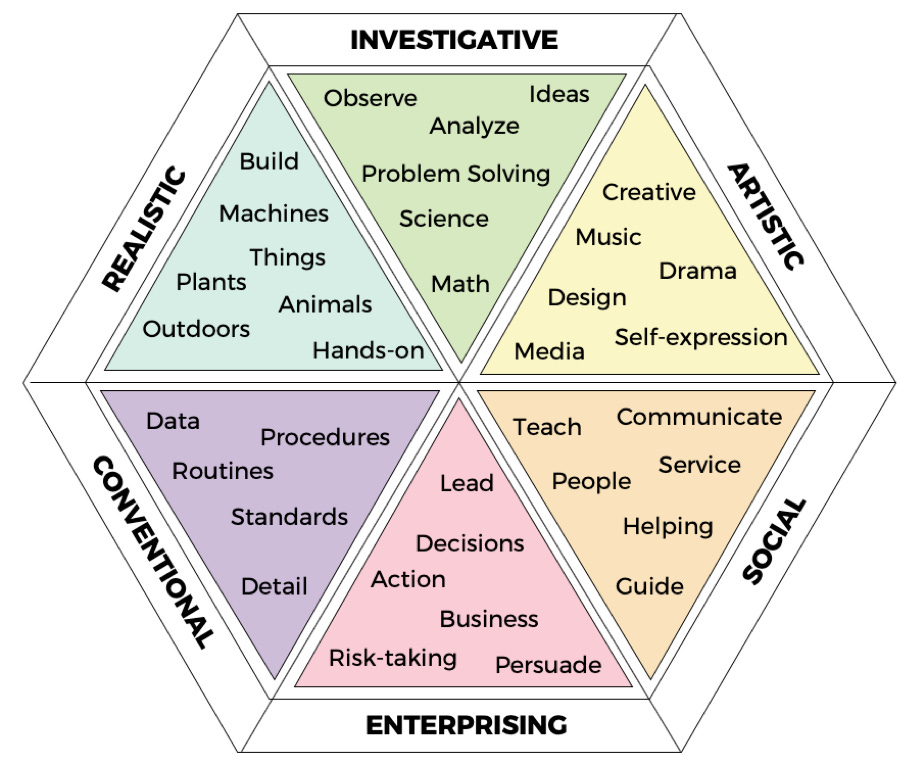
Realistic - You loved building things, being hands-on, working with tools. You were the kid with Legos everywhere, building treehouses, fixing bikes, or taking things apart to see how they worked. These people often become engineers, electricians, mechanics, architects, or surgeons.
Investigative - Always asking “why,” doing experiments, solving puzzles, reading encyclopedias for fun. You were the kid with the chemistry set, the telescope, or the microscope. These individuals typically become scientists, researchers, data analysts, doctors, or professors.
Artistic - Drawing constantly, performing, creating stories, playing music, making things beautiful. You filled notebooks with sketches, put on shows for your family, or spent hours crafting and creating. Graphic designers, writers, musicians, content creators, and artists often show strong artistic interests in childhood.
Social - Organizing your friends, helping others, leading group activities, teaching younger kids. You were the one who got everyone together, mediated conflicts, or naturally fell into caretaker roles. Teachers, counselors, therapists, HR professionals, and social workers typically have high social interests.
Enterprising - Starting clubs, convincing people to join your projects, selling things, natural leadership. You had a lemonade stand, organized neighborhood events, or were always pitching ideas. Entrepreneurs, sales professionals, business managers, and executives often show these patterns early.
Conventional - Loved organizing your room, making schedules, collecting and categorizing things, creating systems. You alphabetized your books, kept detailed lists, or found satisfaction in order and structure. Accountants, project coordinators, administrative professionals, and analysts frequently have conventional interests.
Why This Matters More Than You Think
Think about what this means. People who tried to completely pivot their interests in their twenties—like forcing yourself at 25 to suddenly love math to get a high-paying tech job when you were an artistic kid—were less satisfied and successful than those who followed their original childhood patterns.
The study states: “People whose adult careers matched their teenage interests were significantly more satisfied with their jobs a decade later.” Meanwhile, those who attempted to develop completely different interests as adults to chase salary or prestige found themselves less content, even if they managed to land those jobs.
The Nuance: Satisfaction vs. Other Factors
It’s crucial to understand what this research does and doesn’t say.
Fulfilling work doesn’t always equal being satisfied with your salary—that’s a whole different topic. A related meta-analysis by Hoff’s team (2020) found that while interest fit predicts job satisfaction, other factors like having a good supervisor, supportive coworkers, and fair organizational treatment also matter significantly.
But here’s what the research definitively shows: Doing a job that incorporates your natural strengths and aligns with things you naturally gravitated toward as a kid does equal being more content with your actual work. Not necessarily your paycheck, your commute, or your benefits—but the work itself.
The Bottom Line
Your childhood hobbies and interests weren’t just ways to pass time. According to Hoff and colleagues’ research, they were your brain’s early attempts to show you where you’d find genuine engagement, satisfaction, and success.
So what did you find yourself doing most as a kid? That question might be more important for your career satisfaction than anything a guidance counselor or career test ever told you.
The research is clear: The path to career satisfaction isn’t about developing interests that match lucrative careers. It’s about finding careers—or creating roles within your current career—that match your authentic, longstanding interests.
References:
Hoff, K. A., Chu, C., Einarsdóttir, S., Briley, D. A., Hanna, A., & Rounds, J. (2022). Adolescent vocational interests predict early career success: Two 12-year longitudinal studies. Applied Psychology: An International Review, 71(1), 49-70.
Hoff, K. A., Song, Q. C., Wee, C. J. M., Phan, W. M. J., & Rounds, J. (2020). Interest fit and job satisfaction: A systematic review and meta-analysis. Journal of Vocational Behavior, 123, 103503.
Holland, J. L. (1997). Making vocational choices: A theory of vocational personalities and work environments (3rd ed.). Psychological Assessment Resources.
Photos:
So. I am a project manager. And when I used to go with my mom to the supermarket while she was doing the shops I used to stay at some sector and put everything in order. Books or clothes or whatever. And my mom could spend 2 hours buying stuff and she could find me where she left me hahaha.